
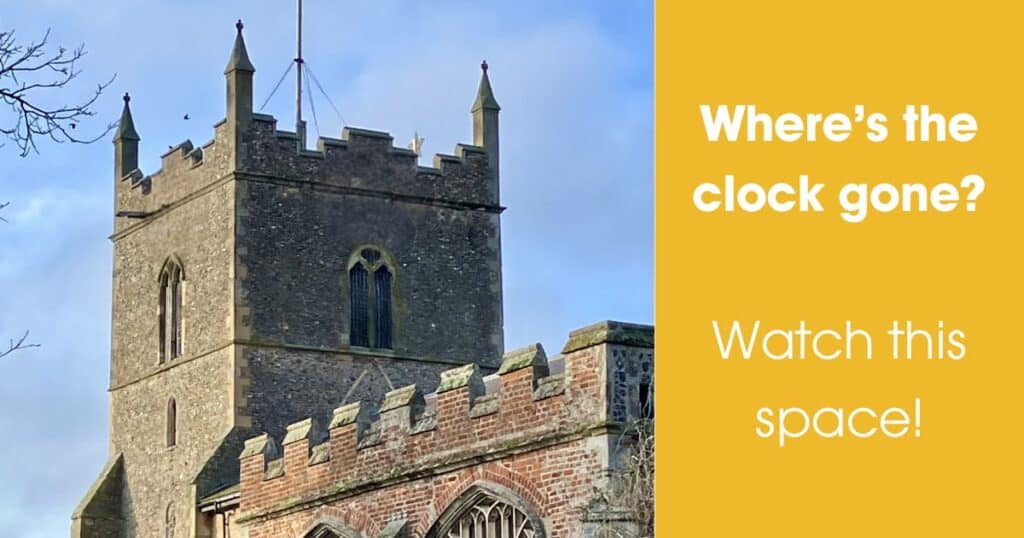

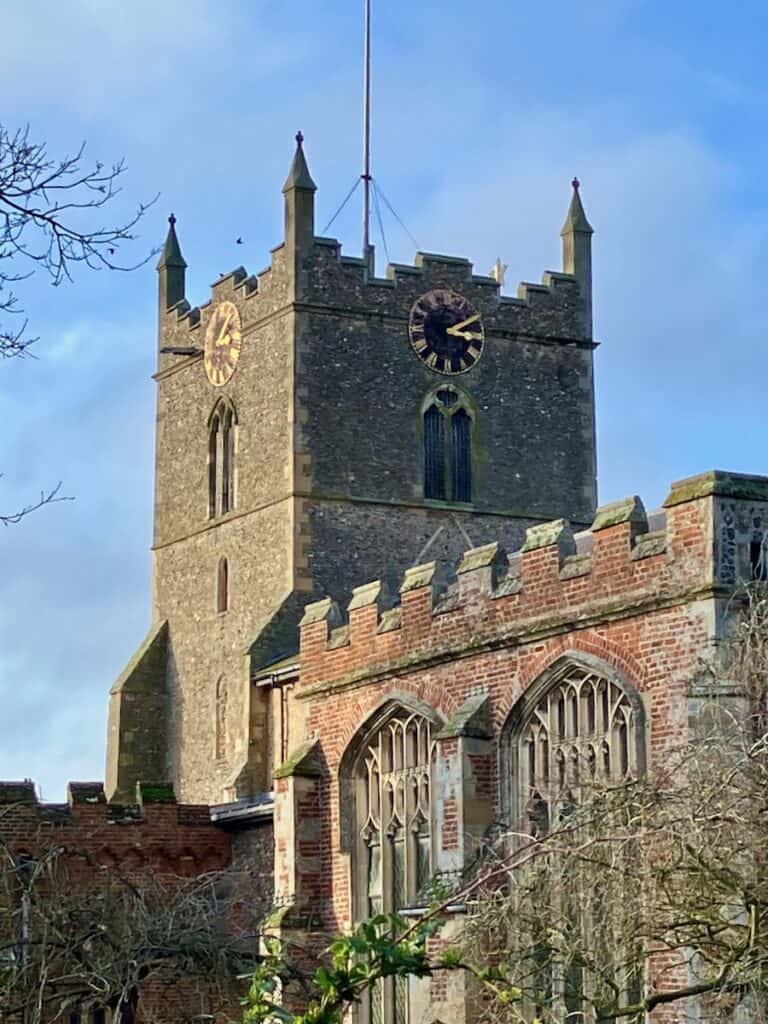
If you notice the clock at St Mary’s Church looking a little “timeless” this spring, don’t be alarmed. Our iconic tower clock is about to undergo its most significant restoration in a generation, returning its four faces to their original 1920s glory. If you have ever looked up to check the time while waiting for your bus, or listened for the chime to say ‘it’s time for tea’, then you know how important the St Mary’s tower clock is for our community. The people of your church are committed to this community so we are keen to keep our clock serving the village for years to come.
The Plan: A Short “Holiday” for the Clock Faces
On the 17th and 18th of February, a specialist team will arrive to stop the mechanism and remove the four 6ft copper dials and their hands. These will be transported to a specialist workshop for a complete refurbishment.
The tower will remain “faceless” for approximately five weeks, with a planned re-installation date of 23rd and 24th of March. As with all work at such heights, these dates are weather-dependent—high winds are the one thing that can put a temporary stop to the march of time!
A Century of Service: The Garrad Legacy
While there have been clocks in the tower since at least 1875, the four faces we see today have a specific and touching history. They were installed in 1923 as a lasting memorial to Mr. William Garrad. The Garrad family were prominent members of our community (living at Brook House), and their gift has helped the village keep time for over 101 years.
The restoration is being carried out by Gillett & Johnston, the very same firm that manufactured and installed the clock back in 1923. Founded in 1844, they are world-renowned horologists who have looked after the clocks of St Paul’s Cathedral and the Royal Exchange. Having the original makers return to work on their own “children” a century later is a rare and wonderful piece of continuity for Bures.
From Shadows to Springs: Telling Time through the Ages
Before the 1923 clock—and even before its 19th-century predecessor—Bures residents told time in a much simpler way. If you look closely at the south-west buttress of the tower, you can still see the remains of a “scratch dial.” This was a medieval sundial where a simple peg (a gnomon) cast a shadow over twelve lines etched into the stone.
The tower itself has survived much drama to keep us on time; in 1733, it was struck by lightning, which famously melted five of the church’s bells. Fortunately, our modern clock is a bit better protected!
What the Restoration Involves
The five-week “spa treatment” for the clock includes:
- Deep Cleaning: Removing decades of Suffolk weather and old, flaking lead paint.
- 24-Carat Gilding: The Roman numerals, minute marks, and hands will be painstakingly re-gilded using double-thickness English gold leaf.
- Mechanical Overhaul: While the faces are away, the “motion works” of the clock faces will be stripped and serviced to ensure another century of accuracy.
Preserving Our Landmark
The clock is a vital part of the Bures skyline and a focal point for Church Square. This work, made possible by the generous legacies of Lt. Col. Richard Probert and Mrs Elizabeth Probert and vetted by the Diocesan Advisory Committee, ensures that this local landmark remains in peak condition.
We look forward to seeing the “new” golden faces catching the spring sunshine in late March. In the meantime, you’ll have to rely on your watches—as for St Mary’s, time is taking a well-earned rest!